Event Details
FestivalOngoing
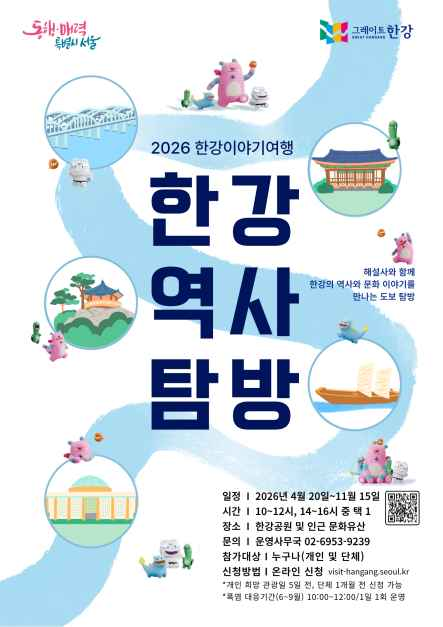
Han River History Tour
Related Videos
YouTube videos found based on the event name
Program
ProgramCourse 1 (Gwangnaru-gil): Themed around the beginning of the Gyeonggang River and war; the main route is Pungnaptoseong Fortress - Statue of Lady Domi - Gwangjingyo 8th Avenue - Gwangnaru Ferry Monument
Course 2 (Songpanaru-gil): Themed around the formation and development of the city; the main route is Samjeondo Monument - Seokchon Lake - Songpanaru Monument - Seokchon-dong Ancient Tombs
Course 3 (Ttukseomnaru-gil): Themed around the founding of the Joseon Dynasty and timber gathering; the main route is Jeongwanwon - Majodan - Salgotji Bridge - Jungnangcheon Stream - Gongssi Bookstore
Course 4 (Nodeulnaru-gil): Themed around the Confucian ideals of loyalty and filial piety; the main route is Hyosajeong Pavilion - Memorial Monument for the Student Volunteer Army - Hangang Bridge - Jugyosa Monument - Yongyangbongjeojeong Pavilion - Sayuksin Park
Course 5 (Dongjakjin-gil): Themed around the history of the auspicious site Dongjakjin; the main route is Dongjaknaru Monument - National Cemetery (Main Gate - Memorial Tower - Graves of Patriots)
Course 6 (Yeouinaru-gil): Course 7 (Seogang Narugil): Themed around the Miracle on the Han River, the main route is National Assembly Building – Yeouido Park (Culture Plaza – Forest of Tradition) – Yeouido Hangang Park Water Light Plaza
Course 7 (Seogang Narugil): Themed around the transportation of tax grain and fish, the main route is Gwangheungchang – Shrine of King Gongmin – Bamseom Bugundang – Seogangnaru Monument – Bamseom Park
Course 8 (Yanghwa Narugil): Themed around the influx of foreign culture, the main route is Foreign Missionary Cemetery – Yanghwajin Site – Jeoldusan Martyrs' Shrine – Yanghwa Naru Monument
Course 9 (Seonyudo-gil): Themed around the development of the Han River and the environment, the main route is Seonyudo Origin Monument – Seonyudo Park – Northwest Observation Deck
Course 10 (Gongam Narugil): Themed around Han River folklore and Heo Jun, the main route is Heo Jun Theme Street – Gongam Narugil – Heogabawi – Gwangjubawi – Heo Jun Museum(*)
Course 11 (Gyeomjae Jeongseon-gil): Themed around Gyeomjae's paintings of the Han River, the main route is Route: Yangcheon Hyanggyo – Soakru – Gyeomjae Jeongseon Art Museum(*)
Course 12 (Nanji Flower Island Path): Themed around the past and present of Nanji Island; the main route is World Cup Stadium – Bulgwangcheon – Peace Park – Nanji Hangang Park – Culture Storage Base
Course 13 (Hangang Centennial Bridge Path): Themed around the Gyeongui Line railway and the modern history of the Hangang River; the main route is Yongsan History Museum – Hangang-daero and Hangang Bridge – Hangang Railway Bridge – Saenamteo Catholic Church – Railway Residences
Course 14 (Dongho Naru Path) *Formerly Gosanja Path: Themed around Dongho Naru, a scenic spot on the Hangang River; the main route is Jungnangcheon – Eungbongsan – Musoemak Site Monument – Ichon Hangang Park
Course 15 (Mapo Naru Path): Themed around the various aspects of the Hangang River shaped by Mapo; the main route is Boksakkot Children's Park – Damdamjeong Site – Mapo Terminal Origin Monument – Mapo Naru Sculpture – Tojeong Yi Jiham House Site – Jeong Gu-jung Houses
Course 16 (Seobinggo-gil): Themed around the storage and distribution of ice during the Joseon Dynasty, the main route includes the Seobinggo Monument, Seobinggo Bugundang Shrine, Hangang Art Park, Hangang Mansion, and Geobukseon Ferry Terminal.
- The course operates when at least 5 people register per session. (Capacity: 5–15 people per session)
- However, the Yanghwa Narugil course, which visits the burial grounds, allows for a minimum of 5 participants and a maximum of 7.
- Admission to and internal commentary for facilities marked with an asterisk (*) that require admission fees, such as museums, is not supported.
Nearby Stays
Recommended stays found around the venue